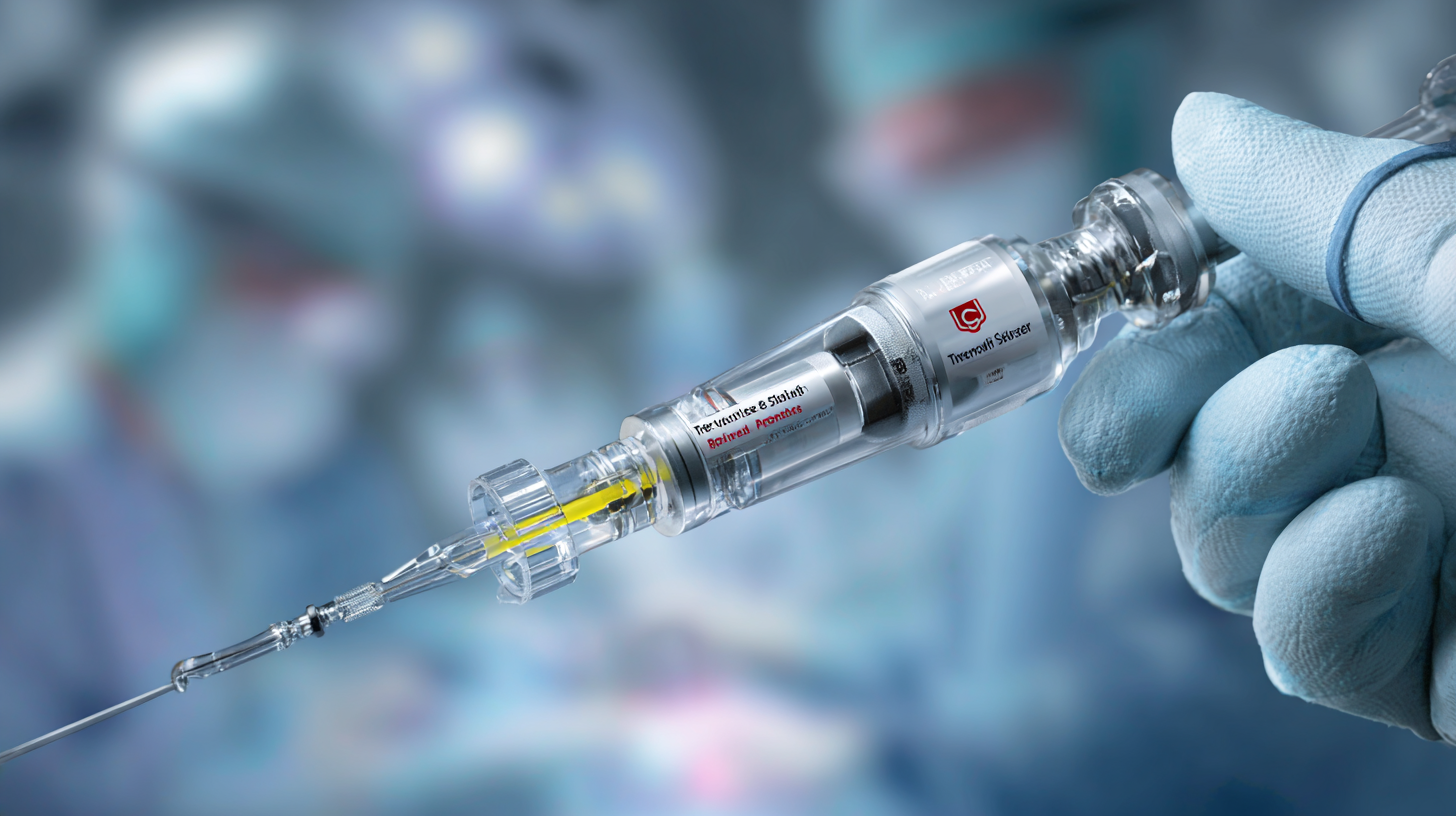
In the ever-evolving landscape of modern medicine, the emergence of innovative solutions has become paramount in enhancing patient care and procedural efficiency. At Tianck Medical Co., Ltd., we are proud to lead the charge in this transformative journey by specializing in precision-engineered products that address the critical challenges faced during medical procedures. Our latest innovation, the best Introducer Sheath, is designed to revolutionize the preparation and insertion process, ensuring improved outcomes for both patients and healthcare providers. As a testament to our commitment to excellence and global outreach, we embody the spirit of "world-class manufacturing, China’s pride, and global exports." Join us as we explore how our Introducer Sheath can tackle existing challenges in medical practices, ultimately contributing to safer and more effective healthcare solutions for all.
Innovative designs in introducer sheaths are transforming medical procedures by addressing long-standing challenges in both preparation and insertion. These advancements focus on enhancing user experience for medical professionals while ensuring patient safety. For instance, modern introducer sheaths are now available with features such as tapered tips and hydrophilic coatings that facilitate smoother insertion, minimizing tissue trauma during procedures. This innovation not only improves the overall efficiency of the procedure but also contributes to quicker patient recovery times.
Tips for effectively utilizing the latest introducer sheath designs include ensuring that the sheath is adequately lubricated before insertion. This can significantly reduce friction and enhance maneuverability. It's also essential to maintain a steady hand and use guided techniques to avoid unnecessary complications. Practicing with simulation models can also help healthcare providers familiarize themselves with the nuances of the new designs, allowing for more confident and proficient use during actual procedures. Embracing these innovative designs can lead to significant improvements in procedural outcomes and patient satisfaction.
This chart compares the performance of innovative introducer sheaths against traditional ones in key areas such as preparation time, insertion time, complication rate, and patient comfort level, showcasing how advancements in design enhance medical procedures.
The process of preparing and inserting introducer sheaths is critical in various medical procedures, yet it often presents several challenges that can impact the overall efficiency and patient safety. One of the most common issues faced by medical professionals is ensuring a seamless transition from the sheath to the catheter. This step requires not only precise handling but also a deep understanding of the equipment being used, as any mishap can lead to complications or extended procedure times.
Furthermore, the materials used in sheath design can affect performance during insertion. Traditional sheaths may be rigid, making it difficult to navigate through tortuous vascular pathways. Innovations in materials and design are essential for overcoming these obstacles. Flexible and tapered introducer sheaths can significantly reduce the risk of vessel trauma and improve the overall experience for both the healthcare provider and the patient. By focusing on these aspects, the medical community can revolutionize the way introducer sheaths are utilized, leading to safer and more efficient procedures.
The integration of advanced technology in medical procedures has significantly transformed the efficacy of introducer sheaths, essential tools in various interventions such as catheterization. Modern introducer sheaths are designed with cutting-edge materials and engineering techniques that enhance their performance. Innovations like hydrophilic coatings help reduce friction during insertion, allowing for smoother navigation through anatomical pathways. Additionally, real-time imaging technologies facilitate precise placement, minimizing patient discomfort and improving outcomes.
Moreover, the development of smart introducer sheaths equipped with sensors is a game-changer. These devices can monitor crucial parameters during insertion, providing feedback to healthcare professionals about positioning and pressure levels. Such capabilities not only streamline the procedure but also reduce the risk of complications. As technology continues to advance, the role of introducer sheaths in medical procedures becomes increasingly vital, helping practitioners tackle long-standing challenges while enhancing patient safety and procedural success.
In recent years, the medical field has seen transformative advancements in introducer sheath designs that address long-standing challenges in preparation and insertion. Through various case studies, we can observe how these innovative devices have significantly improved procedural outcomes. For instance, in a cardiac catheterization case, a new introducer sheath allowed for a smoother insertion process, which minimized patient discomfort and reduced the time needed to achieve Vascular Access. This not only enhanced the procedural efficiency but also increased the overall success rate of the procedures.
Another compelling example comes from interventional radiology, where the latest introducer sheath technology has enabled clinicians to perform complex procedures with greater precision. A hospital reported a remarkable reduction in complication rates associated with the insertion of central Venous Catheters. By utilizing advanced introducer sheaths designed for better maneuverability and security, medical professionals achieved optimal positioning with minimal trauma to surrounding tissues. These case studies illustrate that the evolution of introducer sheaths is indeed revolutionizing medical procedures, offering both doctors and patients improved safety and efficacy in treatment.
The landscape of medical device development is rapidly evolving, with a significant focus on enhancing the functionality and efficiency of introducer sheaths. These vital tools are crucial in various procedures, including vascular access and endovascular interventions, minimizing patient trauma while ensuring optimal access. Future trends indicate a shift towards innovative materials and designs that not only improve the ease of insertion but also enhance the safety of procedures. With advancements in soft-tissue compatibility and expanded lumen designs, introducer sheaths are becoming more user-friendly and adaptable to a range of medical scenarios.
In addition, the integration of smart technology into introducer sheaths is an exciting prospect on the horizon. Features such as pressure sensors and real-time imaging capabilities can provide healthcare professionals with vital information during procedures, potentially reducing complications and improving patient outcomes. As the industry continues to embrace personalized medicine and tailored surgical approaches, the development of introducer sheaths that can cater to specific anatomical variations and procedural requirements will be paramount, pushing the boundaries of what is achievable in medical practice.
: Modern introducer sheaths now include tapered tips and hydrophilic coatings that facilitate smoother insertion and minimize tissue trauma during procedures.
These innovations improve the overall efficiency of medical procedures, contributing to quicker patient recovery times.
Ensuring that the sheath is adequately lubricated before insertion can significantly reduce friction and enhance maneuverability.
Maintaining a steady hand and employing guided techniques are essential to avoid unnecessary complications during insertion.
Practicing with simulation models can help providers familiarize themselves with the nuances of new designs, leading to more confident use during actual procedures.
A seamless transition from the sheath to the catheter is critical, and mishaps during this step can lead to complications or extended procedure times.
Traditional, rigid sheaths can hinder navigation through vascular pathways, while innovations in materials that allow for flexibility can improve performance and reduce vessel trauma.
A deep understanding of the equipment is important to ensure precise handling and to minimize the risk of complications during procedures.
By focusing on enhancing the design and materials of introducer sheaths, the medical community can revolutionize their use, leading to safer and more efficient medical procedures.